You have probably heard collagen thrown around enough times to wonder whether it is actually important or just another beauty buzzword. The honest answer is that it is genuinely important, but not in the way most skincare advertising suggests.
What Collagen Actually Does
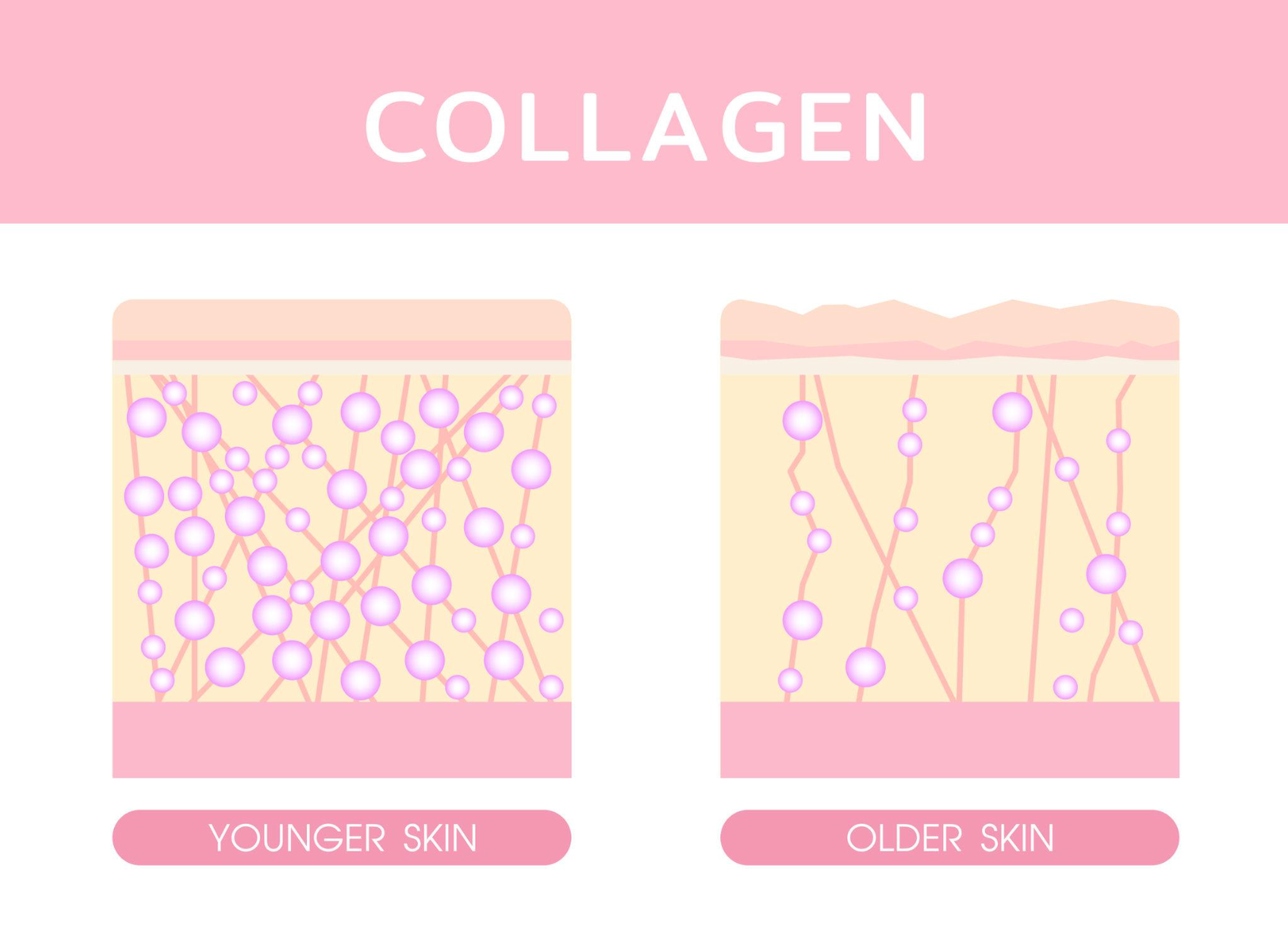
Collagen is a protein that makes up about 75 percent of your skin's structure. Think of it as scaffolding. It gives your skin firmness, thickness, and that subtle bounce you notice in younger skin. When collagen is abundant and healthy, your skin looks smoother, feels resilient, and holds its shape better. It is not the only thing that matters as skin changes, but it is a significant player.
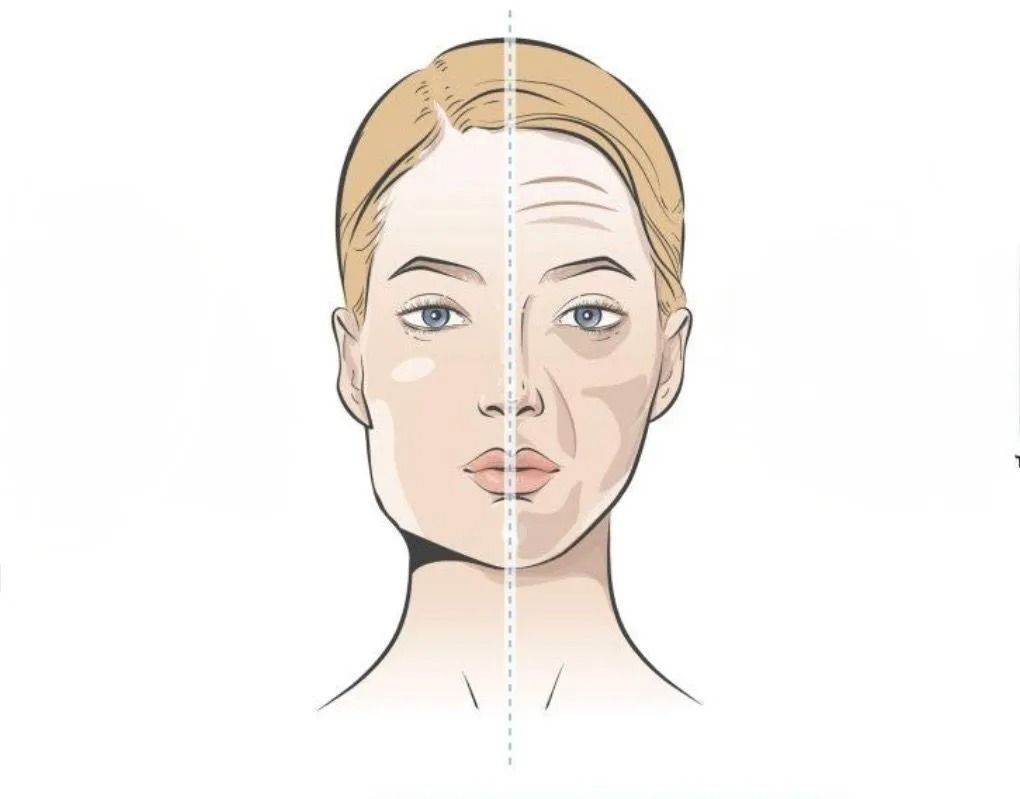
The problem is simple. Your body makes less collagen as you age. Starting in your mid-twenties, collagen production declines by about one percent each year. By the time you reach 40, many people notice that their skin feels less firm, that lines appear deeper, and that texture has become rougher. That is collagen depletion at work.
Different Types, Different Jobs
There are 28 known types of collagen, but your skin cares most about five of them. Type I is the heavyweight, making up about 90 percent of your skin's collagen, and it is responsible for firmness and structure. Type III supports elasticity and works alongside Type I to keep skin plump and resilient. Type IV anchors your skin to the deeper layers. Types V and VII play supporting roles in texture and barrier function.
Why this matters: different treatments stimulate different types of collagen, and understanding that helps you choose what actually makes sense for your goals.
Collagen and Elastin Are Not the Same Thing
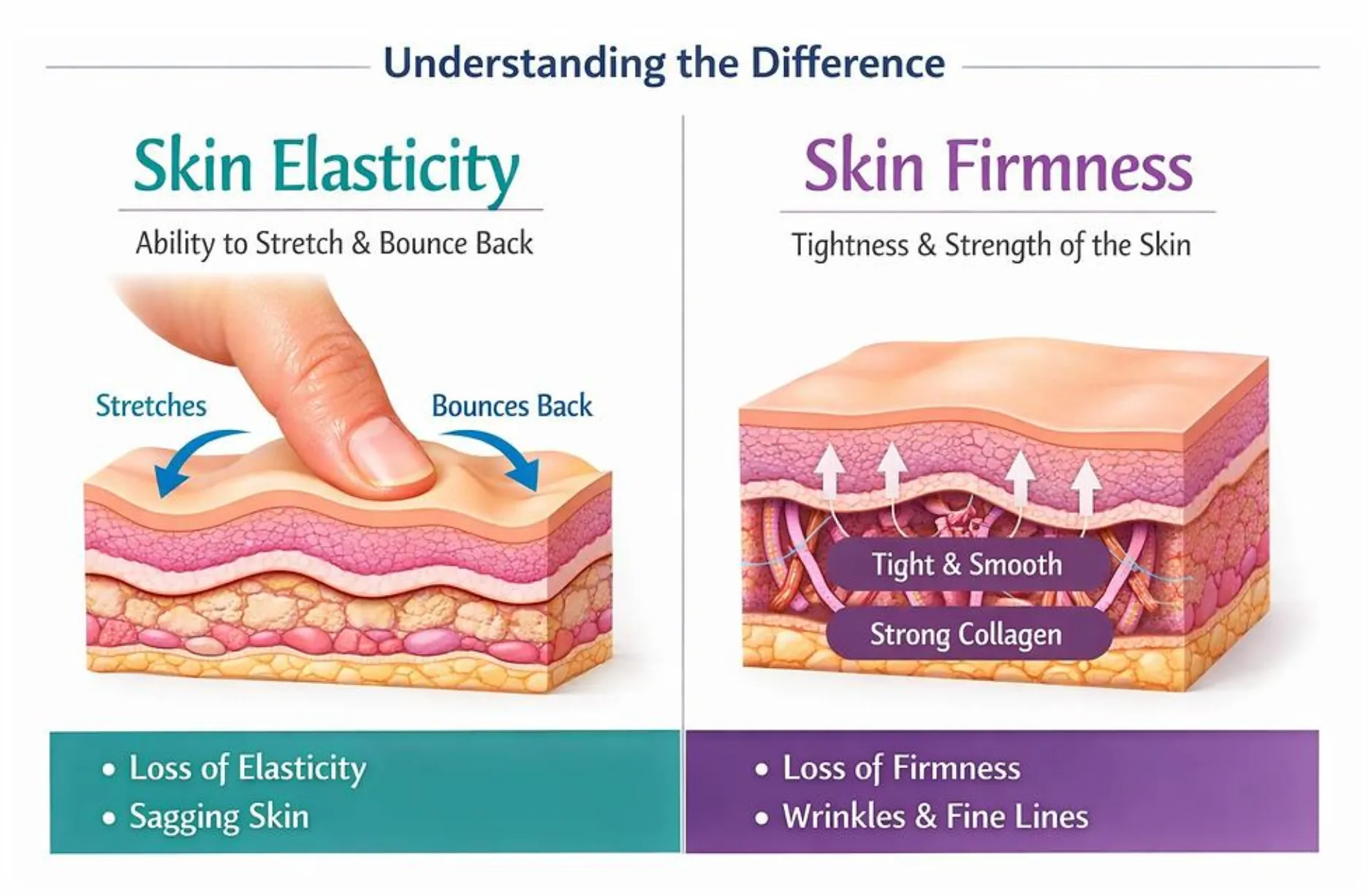
Many people lump collagen and elastin together, but they do different jobs. Elastin is the protein that lets your skin stretch and snap back. When you pinch your cheek and release it, elastin is what brings it back. Collagen provides the structure, elastin provides the flexibility.
Both decline over time. Both get damaged by sun exposure. But they are separate systems, and you need an approach that addresses both if you want genuinely resilient skin. That is why effective treatments work on collagen remodeling while also supporting elastin recovery.
Eating or applying collagen is not the same as making it. A collagen molecule is far too large to pass through the skin barrier from a cream. What works is triggering your own fibroblasts to produce more, which is what the treatments below actually do.
How These Treatments Build Collagen
If you are ready to do something about collagen loss, there are three main approaches I offer that directly stimulate collagen production.
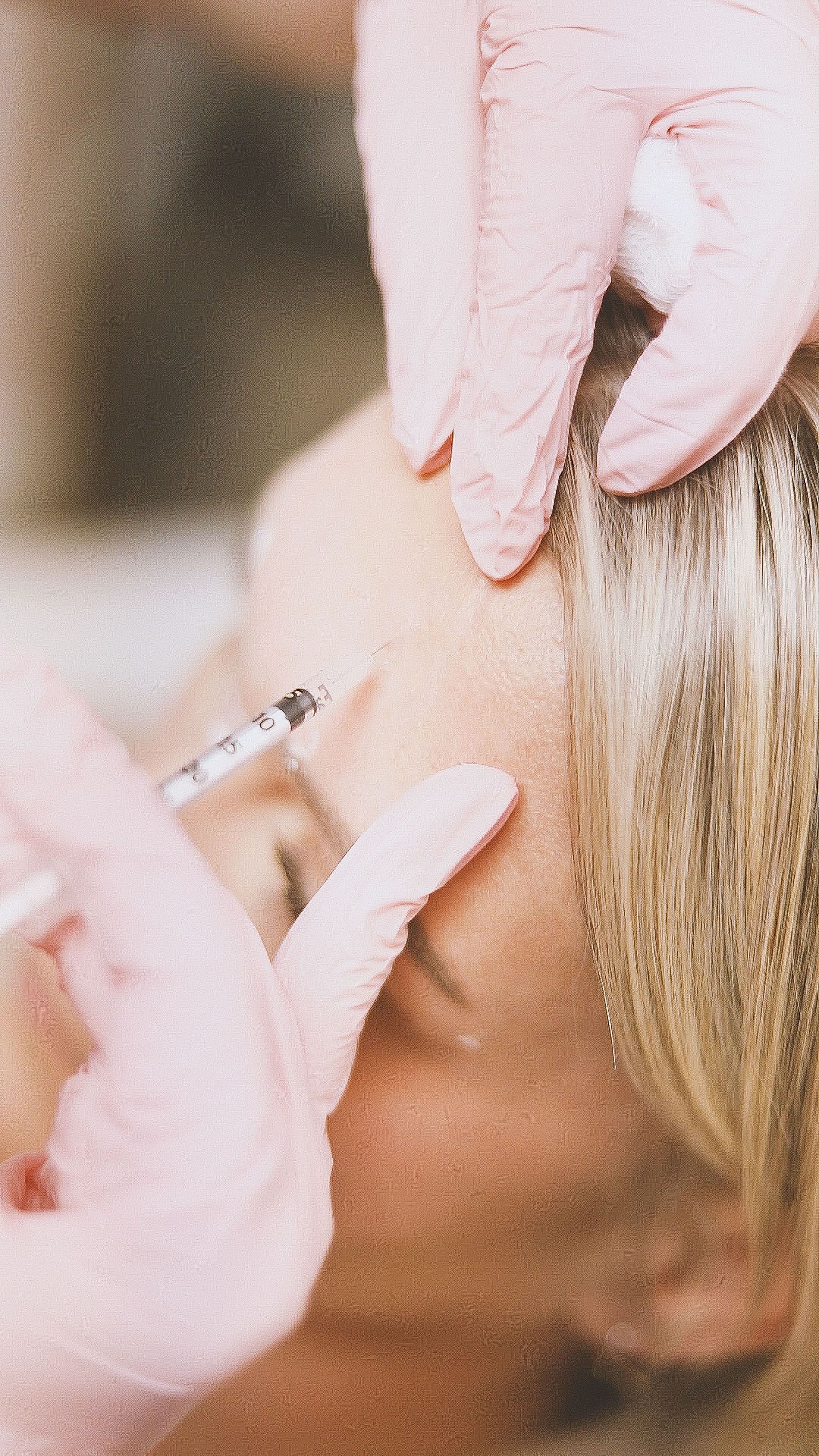
Sculptra and Radiesse are injectable biostimulators, and they work differently from traditional fillers. Radiesse uses calcium hydroxylapatite to provide immediate volume while simultaneously triggering your body's collagen-building response. Sculptra uses poly-L-lactic acid to gradually stimulate Type I and Type III collagen over weeks and months. Results from both develop over four to 12 weeks and can last 12 to 24 months or longer, often improving with a series of treatments. These are particularly useful if you are dealing with volume loss, deep folds, or crepey texture.
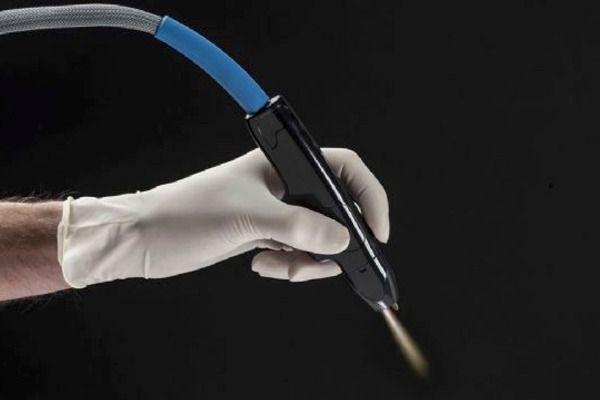
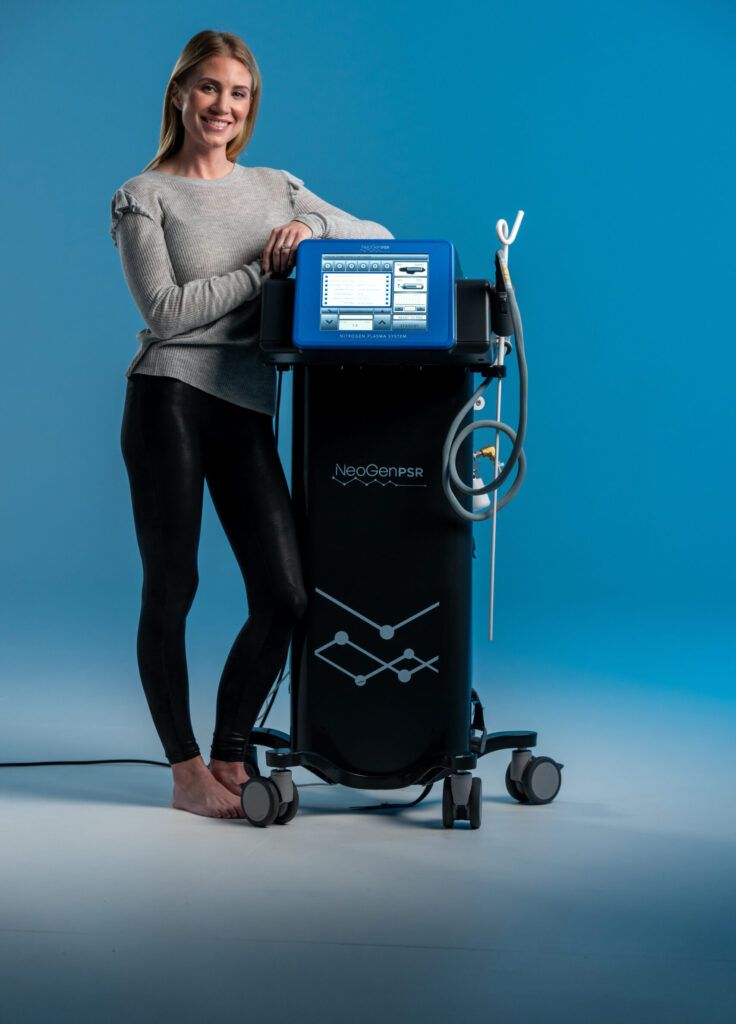
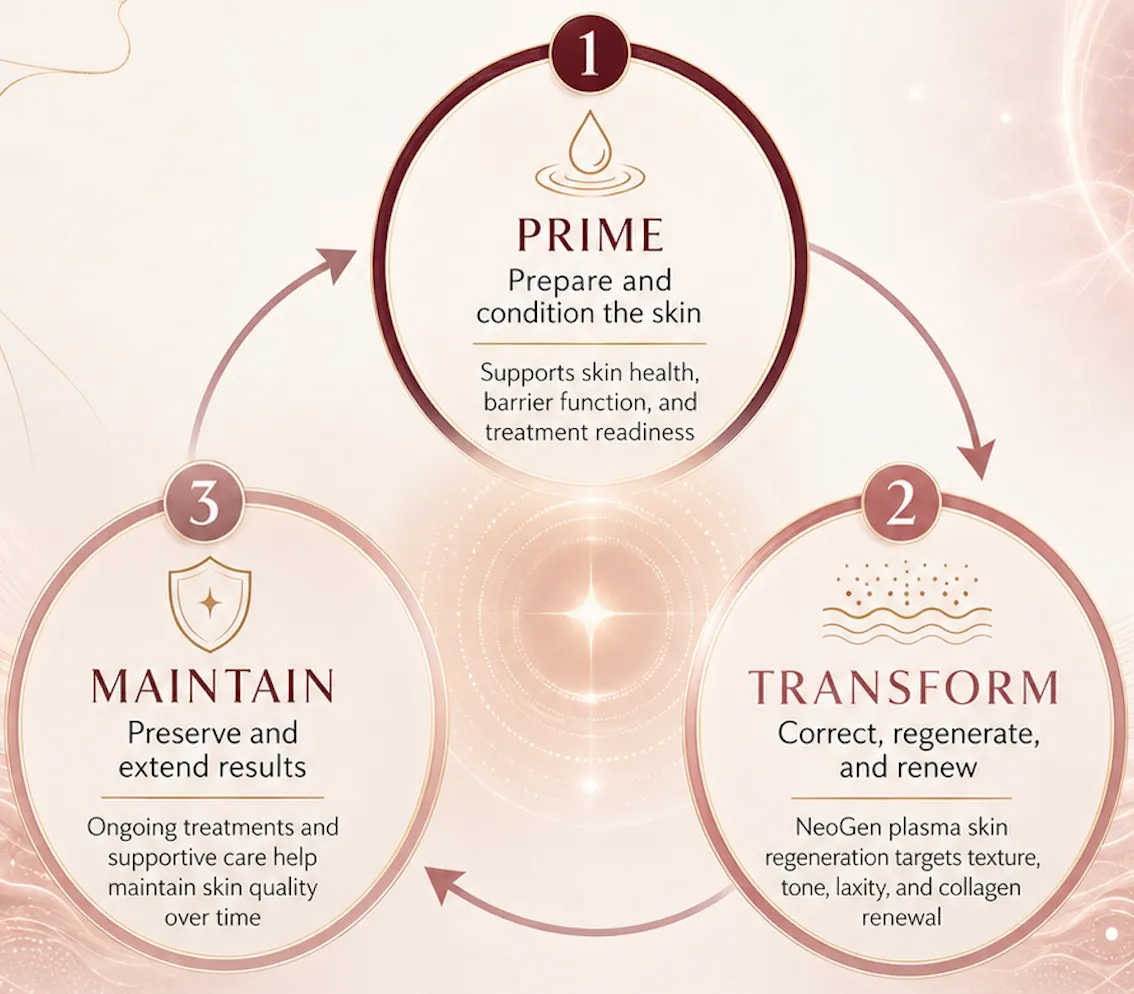
NeoGen Plasma Skin Regeneration works from a completely different angle. It uses nitrogen plasma energy to create controlled micro-injuries beneath the skin's surface, triggering intense collagen and elastin remodeling without removing the outer layer. It stimulates collagen at multiple depths, which is why it is effective for everything from fine lines to loose, crepey skin to uneven texture. Results continue improving for up to 24 months as your body lays down new collagen fibers. Because it is a resurfacing treatment there is some peeling involved, typically zero to seven days, and most people find the result worth it.
Each approach offers something different. Biostimulators build volume gradually and work beautifully for structural loss. NeoGen addresses texture, tightness, and resurfacing all at once. Which one suits you depends on what you are actually seeing in your skin.
Skin Health Comes First
Here is something important: injections and energy devices are not the only way to support collagen. Professional facials, microchanneling, and a solid skincare routine matter tremendously. When you use microchanneling with growth factor serums, you are delivering ingredients that support collagen function at the cellular level. When you get a regular facial, you are supporting overall skin barrier health, which makes every other treatment work better.
Sun protection is non-negotiable too. UV damage is one of the biggest culprits in collagen breakdown. Using a mineral sunscreen like Circa-Shield daily is not glamorous, but it genuinely slows collagen loss. You can find what I recommend on my professional skincare page.
When Should You Start?
This is where honest advice matters. You do not need collagen stimulation in your twenties if your skin is healthy. Prevention through sunscreen, good skincare, and basic skin health goes a long way at that stage.
Most people see real benefit from collagen-stimulating treatments starting in their forties, when the natural decline becomes visibly noticeable. That said, if you are noticing texture changes, early laxity, or the beginning of deeper lines in your thirties, there is nothing wrong with starting earlier. It is about what you see in your own skin and what your goals are.
- Build the foundation first, with daily sun protection and a routine you will actually keep
- Add a texture and collagen treatment such as microchanneling or NeoGen when skin quality starts to change
- Layer in biostimulators if structural volume loss is part of what you are seeing
The best approach is rarely one treatment alone. Most people get better results combining methods, and the order above is usually how I build a plan.
Frequently Asked Questions
The evidence is mixed and far weaker than the marketing suggests. Collagen you swallow is broken down into amino acids before your body decides what to do with them, so you cannot direct it to your face. A supplement will not hurt, but I would not build a plan around one.
Not directly. A collagen molecule is far too large to pass through the skin barrier. What a good product can do is support the environment where collagen is made, which is why well-formulated retinoids, peptides, and vitamin C are worth using. They work on your fibroblasts, not by delivering collagen.
Longer than most people expect, and that is the point. Biostimulators develop over four to 12 weeks. NeoGen keeps improving for up to 24 months. If something promises instant collagen, it is giving you something else.
It depends on what you are trying to fix. NeoGen stimulates collagen at multiple depths and also resurfaces, so it does the most at once. Biostimulators build structural support more gradually. The right answer comes from looking at your skin, not from ranking the devices.
No. Collagen production slows, it does not stop. Older skin still responds, it simply responds more slowly and may need a series rather than a single session. I will tell you honestly what is realistic for your skin before you commit.
Yes, and it is the single highest-return thing on this page. UV damage is one of the biggest drivers of collagen breakdown, so daily mineral sunscreen protects the collagen you have while the treatments rebuild what you lost.
Often yes, but timing matters. They stress the skin in different ways and I would not do both in the same window. I plan the sequence so each one has room to do its job.
A filler adds volume directly and you see it immediately. A biostimulator triggers your own collagen to rebuild, so the change is gradual and the result is your own tissue. Fillers are faster, biostimulators last longer and improve with time.
Yes. The controlled micro-injury signals your skin to repair, and repair means new collagen. Paired with growth factor serums it does more, which is why I rarely do one without the other.